
Weapons and armour:
**************************************************************
Note: Not everything depicted is to size. The descriptions and names have been translated from Mongol/Uyghur into Chinese and Manchu by Qing scholars, then later translated into Russian and then finally into English, so there are many layers of both linguistic and cultural translations in this text.
Also to note is that few pieces or Dzungar weapons or armour have survived, nearly all that is depicted is from translated sources that merely describe the equipment in question, as well as a few later Qing illustrations from artists that possibly would have seen some of the equipment in person. Overall the document mainly focuses on the differences in equipment between the Qing and Dzungars to emphasize their uniqueness as foreigners, when in reality two would have possessed very similar arms and armour, possibly due to the fact that it made them uncomfortable relating to a people who did not want to submit to their rule. This was probably due to their tied relationship with the earlier Yuan, which controlled both Manchuria and Dzungaria during its time as the ruling Chinese dynasty before being exiled north by the Ming. Also something to note is the similarities between art of Dzungar casual wear and the Yugars whom the Dzungars would have been neighbours of during their height.
Swords:
**************************************************************

Saliema – Saliema was the name for sabres in general, both curved and straight single edged swords. This specific one is a larger heavier version) A thicker and straight style sabre made for chopping. It had a rectangular blade and a long handle made out of iron, making the weapon very heavy. The handle was covered in fish skin, either fish scales or stingray skin. Russian observers likened them to European broadsword of the time but slightly shorter in length. Sabre scabbards were reminiscent of those from the middle east. They were usually made out of leather or metal sheets and sometimes decorated with scale patterns. Copper rings were attached with leather cords to tie the scabbard to the belt.

Yld – A slightly curved thrusting sword with a wide blade, similar to Chinese style Dao. The Qing noted the similarities between their swords and Dzungar swords, with the exception of a cross guard instead of a circular one.

Shor – A straight double-edged sword about 1 meter in length. The hilt is made of leather with a copper ring attached to the bottom. The ring usually had silk ribbon or tourniquet attached to it.

Konchar – A straight long sword with a tapered end designed for stabbing. It is most likely a Polish or Russian small-sword that has been imported.

Khanjar – A long double-edged dagger that is mostly straight but curved to a point in one direction. It possesses a large handle made out of a large piece of bone or ivory.
Axes:
**************************************************************

Aipaletu/Aibalta – A cast iron axe with a sharp spear tip at the top of the handle. The handle itself was made out of cast-iron making the weapon heavy despite not being very large, the blade axe being only about 20cm. The reverse of the axe had about 20 metal teeth attached; how and where they were attached is not known but possibly they functioned as a type of saw. Primarily used by Kyrgyz or Kazakh people in the Dzungarian Empire. Other versions had a more simple C-shaped blade without the metal teeth on the back.
Polearms:
**************************************************************

Jida – A pike in length of about 3-4 meters, this would have made them some of the longest spears used at that time. The spear tip is long spike, about 22cm long and bladed on both sides with shorter spike added to the butt of the staff, the spear tip was inserted into the end of the pole and attached via a longer piece of metal with hoops that hook around the poles outside and hold the tip in place, the metal parts attached to the end of the staff and tip was to both reinforce the spear and protect against enemies targeting its weak-point. Attached to the pole were small tassels made out of camel hair, they were attached as decoration via drilling into the pole. Some extreme examples can range up to 5-7 meters in length. A large loop attached to the lower-middle of the pole to act as a shoulder strap and a smaller hoop the bottom to loop around their foot.

Naiza – A spear about 3 meters in length. Despite being shorter, the spear tip was slightly wider and longer attached in the same manner as the Jida to the staff. The spear tip was attached with rings of copper and ox hide to protect against enemies targeting the weapons weak point. The Naiza had nine leather wraps across the staff and a hoop to carry on the shoulder.
Bows and Arrows:
**************************************************************

Numu/Yay – A Mongol composite bow. Though the Dzungars began to move more towards firearms in the later years of their empire, bows still played a big part in both their military and their culture. The bow string was constructed out of the sinew of large mammals the bow itself was decorated with goatskin and fur covering the belly and back of the bow. The central part of the bow string was wrapped in horse hair or leather to protect if from shafing with arrow eyes. The Qing noted the Dzungar bows being made out of a specific type of wood, Chinese mulberry, giving the bows both strength and flexibility, as well as a nice wood texture pattern. The bow itself was around 1.5 meters long, making it shorter than the Qing bows, however they were noted for being very tightly drawn and being able to produce a lot of power from their bows.

Sumu/Aoke – Arrows with a wooden shaft, the arrow heads had three or two edges and were highly polished with a wave patter, possibly folded metal or Damascus style steel. Described as being slightly shorter than the counterparts of their neighbours. The Dzungars used two versions of arrows, narrower feathers for long distance shooting and larger feathers for short distance shooting.
Firearms:
**************************************************************


Bao/Pao(Rifle) – Bao/Pao was the general term for both firearms and cannons, much like how guns used to be categorized in Europe. Most guns lacked direct names and were simply referred to as Bao in general. As for rifles, the most common one was a type of arquebus with a loose rope wick, sometimes with a bi pod attached for knelt firing as sown in figure 1. Around 130cm in length. It had no proper stock, instead being similar in design to other Asian muskets, like the Chinese Niaoqiang but a lot shorter. The Dzungars also imported a large number or old Russian and Turkish rifles. Figure 2. depicts the type of Russian musket that would have been used during the Great Northern War, and would have later been imported to Dzungaria through trade.


Bao/Pao (Cannons) – Most early cannons used by the Dzungars would have been captured from the Russians, it was only after the capture of the Swedish Artillerist Johan Gustaf Renat that natively produced cannons would be produced in Dzungaria. These cannons were described by both the Qing and the Russians, along with Renat himself.
The cannons were mostly made up of cast iron or copper and usually around 1 meter in length and used lead balls. They came in two variants, either made out of iron or copper alloy, with two different sized diameters measuring around 9cm, or with a larger diameter of 16-19cm (equivalent to a 4 pounder). Renat himself claimed that he had produced 15 four-pounder cannons, 5 small cannons and 20 ten-pounder mortars, most likely these would have resembled those used by the Swedes and Russians but no further descriptions of them are made other than their length and the material used to construct them. In addition to the cannons length, wooden carriages were attached to camels saddles.
The smaller variants were carried and fired from the backs of camels whilst the larger and heavier ones were fired from wooden platforms stationed towards the ground; by this they probably they mean gun carriages like those used by Europeans, these gun carriages were dragged from behind by camels or horses, either on wheels or sleds. If the versions that were fired from the backs of camels had any sort of wooden carriage that pressed back against the ground to aid against recoil is not known, Bactrian camels are heavy and are able to withstand strong winds whilst sitting so they might be large enough to absorb the recoil. These images shown are purely speculatory, but according to the Russians the cannons were both transported and fired on the backs of Camels.

Khuybao – The only gun variant with a dedicated name. It was a large shotgun roughly 1.6 meters in length. It was mounted to camel saddles like a Zamburak used by the Mughals and Persians. It could be fired by the riders whilst moving forwards on camel back and was noted for having a very large stock.
Armour and Clothing:
**************************************************************


Duhulaha/Duyulega – An iron Dzungar helmet; somewhat similar in shape to Qing and earlier Yuan dynasty helmets, with a metal visor in the front above the eyes. The helmet was made up of 4-8 separate plates that were riveted together and fixed in place with a metal hoop. At the top were attached two cylinders combining to form the plume sleeve. Unlike Qing helmets, it lacked the distinctive metal forehead protector, instead having the brim right at the eyebrow line. The Duhulaha was probably derived from older Yuan style helmets that the Qing also adopted.
Oirat Malgai – Literally translates to Oirat Hat, It was worn by both men and women and made up of either felt or cloth. The hat had two brims on the side of the hat and a conical shape at the top, with a tassels draping over the cone (If these tassels denoted ranks such as Zaisan is not know, but there are variants without the tassels that are seemingly mostly worn by commoners). The two brims on the side what were either blue, brown or black in colour. It somewhat resembles the hats worn by the Yugurs or Yellow Uyghurs. Some variants also have taller and thicker fur brims.
Olpak – A fur brimmed winter hat variant of the regular Oirat hat.
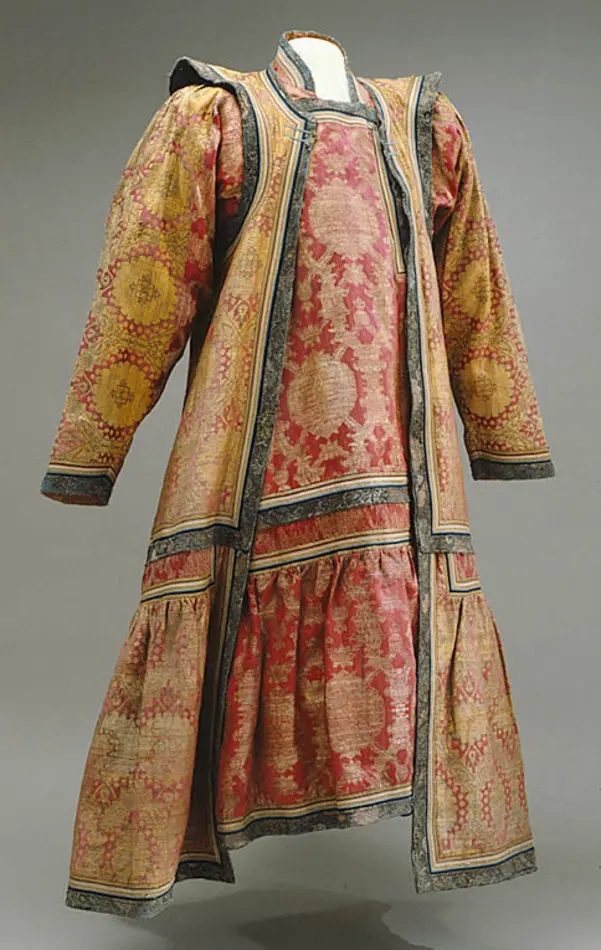
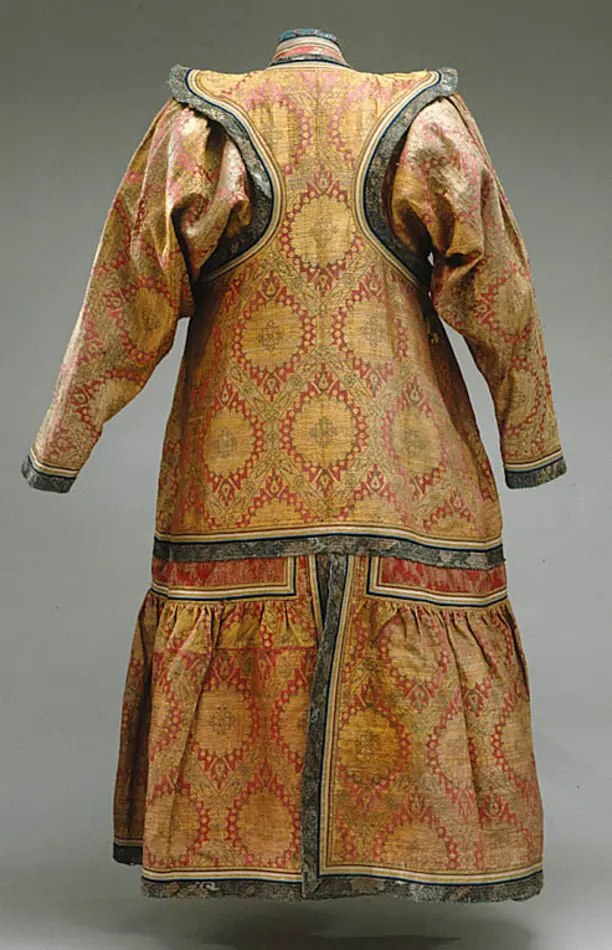
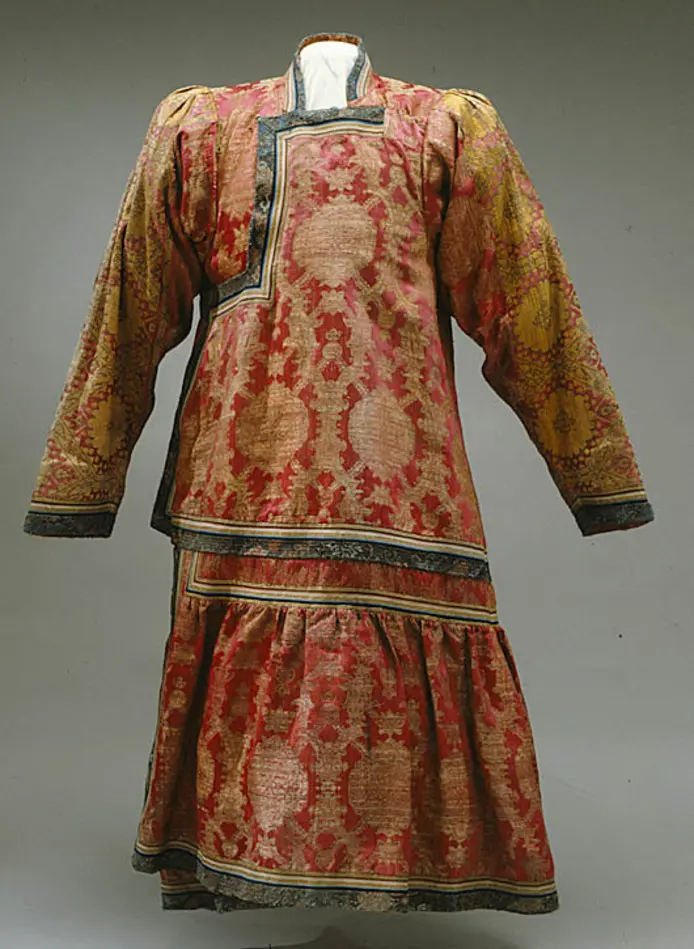
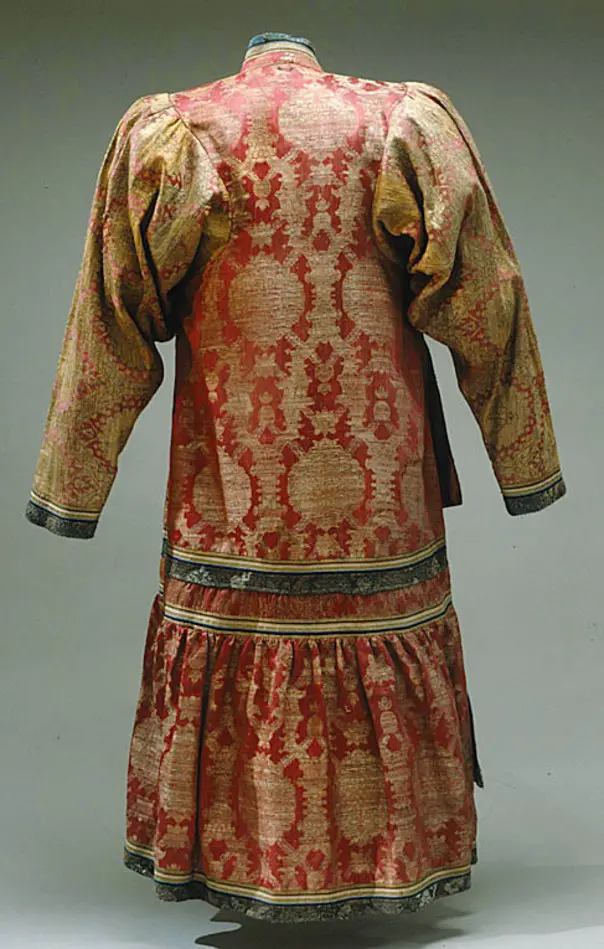
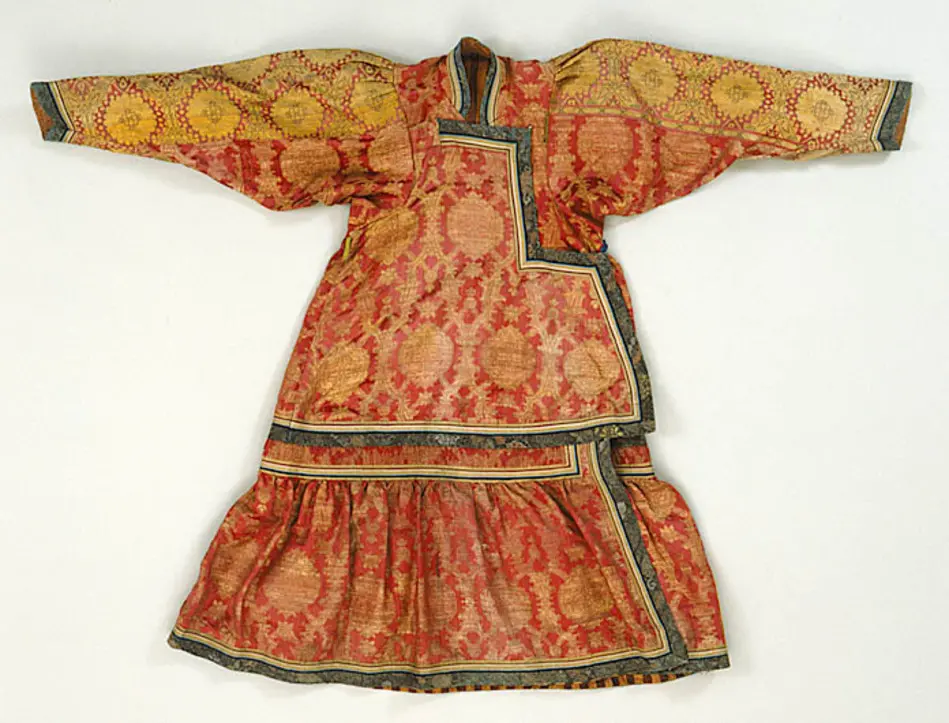
Dewl – The most common clothing in Dzungaria worn by nearly everyone, it is nearly identical to the Khalkha Deel. It is a long loose robe that reaches down to either the ankles or knees of the wearer and wrapped around the torso and held together with a long cloth belt tied around the stomach. The front of the Dewl typically has a diagonal line across the chest from the neck down to the hip, but could also be in a square shape. There are some the more later versions have a square shape from the neck to the hip, the square is held op by a string and button attached to the shoulder of the dress to the corner of the square. The Dewl is usually made up of a large piece of fabric that is either plain or patterned with flowers, some versions are also made up of leather. It would have been worn by commoners and nobility alike during both as a military dress and as an everyday garment.
Olbog/Olboγ – Quilted soft armour
Huyake/Kuyake – A thick quilted brigandine jacket with small metal plates attached on the inside and smaller decorative metal plates on the outside. Described as being made up of hemp, cotton and wool. A large and slightly convex round metal disk was attached to the chest and was polished to become a mirror. These would be somewhat similar in appearance to Qing brigandine.
Elepake – A thick long quilted jacket worn as a gambeson without metal plates.
Chalaina – Either two or four large metal mirrors attached to the armour by either leather cords that were worn across the torso over the armour, or sewn directly onto the armour.
Saote/Sauyt – Dzungar chain mail.
Baledamutsi – An iron belt corset worn over the main armor, it was made up of multiple long rectangular metal strips rivited to three leather belts that covered the wearer’s stomach and lower back.
Sakedake/Saadakky – Arrow quiver made out of leather. Arrows were placed with the tip down and fletching up. The arrows were tied down inside the quiver with a taut rope to prevent the arrows from spilling out, with the arrows being tied down in different sections of the quiver to differentiate the different arrow types. There were also simple Sakedake made out of leather and rope to carry firearms on their backs.

Shalabaer – Thick outer pants worn over the regular inner pants. They were made out of suede leather with paper, wool or fur inside depending on the warmth necessary. Those worm by nobility would decorate them in floral patterns and attached with braids or fur linings. They were tied around the stomach with the hem of the robes being pulled up and tied to the belt, something that was common to do as it allowed for easier movement with the legs. The pants were long, going from the stomach and down to the ankles, either being tucked into the boot or worn over them.

Zhangmian – (Face screen) was made out of chain mail and covering the face in a V-shape balaklava going down to the neck with eye holes left for visibility. Though this might have been from later migrations from European populations, the later Kalmyk migrants might have gotten this type of face protection from the Circassians.

Tobe Borik – (Top hat) A thick felt hat or skull cap that covered the forehead, ears and wrapped of the wearer if four large flaps. It was possibly similar to a Bashlyk or a Kazakh Malahai. Thicker hats worn during wintertime would have woollen lining. Some hats would have been sewn onto the helmets to act as additional protection from blows to the head and neck.
Banners:
**************************************************************

Figure 1: Banner of the 3rd Don Kalmyk Cavalty. It depicts the four supernatural creatures (A Garuda, Snow Lion, Tiger and Dragon) surrounding a Wind horse and Mahakala, along with Buddhist mantras.
Figure 2: Reconstructed Kalmyk banner depicting the figure Daichin Tengri, the mongol red god of war. Above him are bird and under are dogs, symbolising his position in between heaven and earth.
Mani – Are banners in the ratio of 10 in height and 8 in length, they are covered in colourful dyes and sometimes printed with mantras in Tibetan, when the wind flips the banner the mantras are recited bringing good fortune. The flags had a surrounding red borders with cloth tongues attached to the ends of the flag. The tongues had their own intersecting colours. The banner would have been carried by a variety of lower to high ranking commanders. Muslim versions had flowers and leaves were sewn as patterns to the banner and ribbons or tassels were attached to the ends of the banner. At the top of the pole was a plate of gold with the name of the prophet Muhammad carved out. A red horsetail or ribbon sulde was attached under the plate. Larger suldes without a banner would only be a stick tied to a pole with coloured ribbons n the traditional Buddhist colour.
Tug Mani/Tukemani – Same ratio but slightly larger in size from the regular Mani, around 3 meters in length along the flagpole. They were green in colour and made out if silk instead of cotton and too adorned with Lamaist mantras. The flag staff was sometimes topped with a hair bunchuk. These were only carried by the princes. At times a simple stick with ribbons in Buddhist colors tied
Aliyamu – Whitebanners carried by Muslim beys and commanders attached to a pole. The banner itself was about 1 meter wide and 1.6 meters tall in a rectangular shape. They had Arabic or Persian text printed on top and a cloth ribbons attached to the outer edge of the banner. A horse tail was attached to the top of the staff. The banner were attached to the backs of riders.


Troops:
**************************************************************
Angjis – A Dzungar military estate. 21 member of the Choros clan, including a few prominent leaders of the other clans in charge over what was essentially the standing army of the Dzungars. A more centralised and standardised recruitment unit above tribal/clan authority and under the direct authority of the Khong Taiji.
Baoqin – Rifleman
Baotsinaer – Minister of Artillery and firearms.
Khya – Aide-de camp.
Kashkha – Officer
Hairstyles:
**************************************************************
Men – There are no mentions of explicit laws regarding hairstyles as they seemed to be less strictly enforced by the Dzungars than the Qing or by their Mongol Empire predecessors. Most men are depicted either with a shaved head; probably derived from their Buddhist religion. Many young men of nobility spent time in Tibet as monks to get a Tibetan education, including some of the Dzungar Khong Taijis. Another common one is the Shala, it resembled a bowl cut with the front of the hair short or shaved, the back was cut into a sort of half-bob . The Shala was sometimes tied at the back somewhat reminiscent of the Manchu Queue albeit much shorter and not braided. Boshigt Khan is usually depicted as sporting the classic Mongol hoops, both on statues and in artwork.
Women – Women’s hairstyles was worn as long straight hair or braided into many long strings. Most commonly tied in a single braid or tail but sometimes worn loose. Married women like their Kalmyk relatives had their hair tied into two braids. A piece of cloth called a Shivrlg was sometimes wrapped around the braids for decoration. Also to note is that it seemed to be all women in Dzungaria, not just the Oirats, as Muslim Uyghur and Kyrgyz women are also depicted with two braids and usually do not have their hair covered.
Symbols:
**************************************************************

Trishula – In place of a sulde could also be a Buddhist Trishula. A type of trident with metal rings attached made to resemble a Khakkhara or Buddhist power staff. Many Lamas in Dzungaria would not have been simple monks, but would have also been expected to take up military roles due to the demanding conscription laws of the empire.

Double Vajra/Dorje – It would have been a very common symbol, as it symbolised unity, power and indestructibility, both in Tibet and in the Dzungar realm.
The Snow Lion – It was a creature
from Tibetan mythology, it symbolised
strength, fearlessness and joy in spite
of suffering.

The Triple Gem – Is an icon that symbolised the three core elements of Buddhism. The Buddha, Dharma and Sangha.

The Endless Knot – It is an ancient symbol found in various cultures all over the world. Whiting
Buddhist teachings it symbolises Samsara,
the endless cycle of death and rebirth.
The Gankyil – Also referred to as the wheel of
Joy. It features three swirling colours of blue, red and yellow; deriving the same meaning as the Triple Gem. The symbol can be depicted
as spinning in either a clockwise or counter-clockwise direction and was adopted from the old Bön religion of Tibet.

Photographs:
**************************************************************
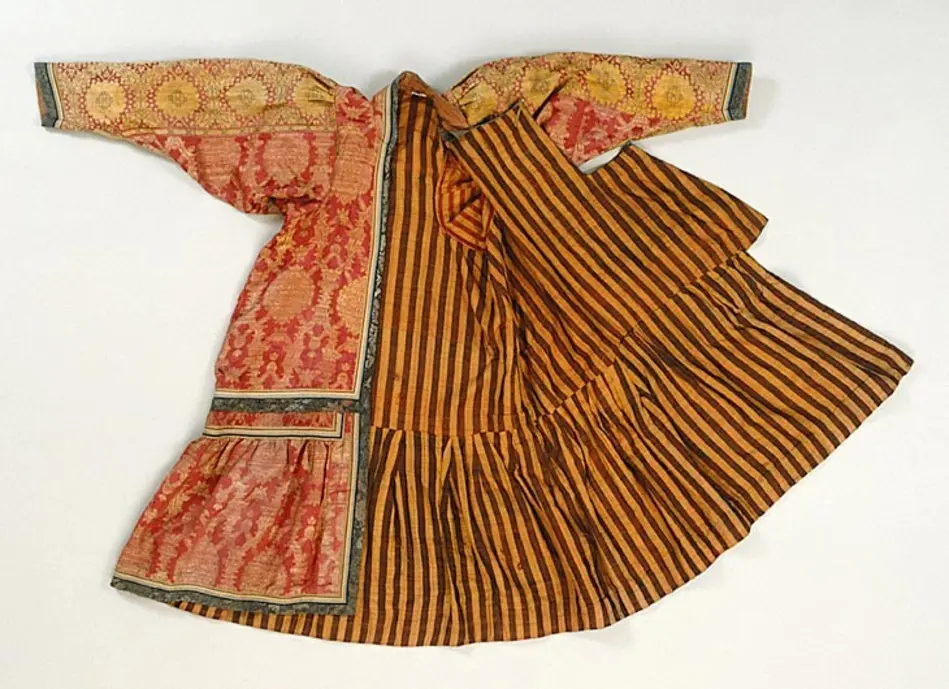
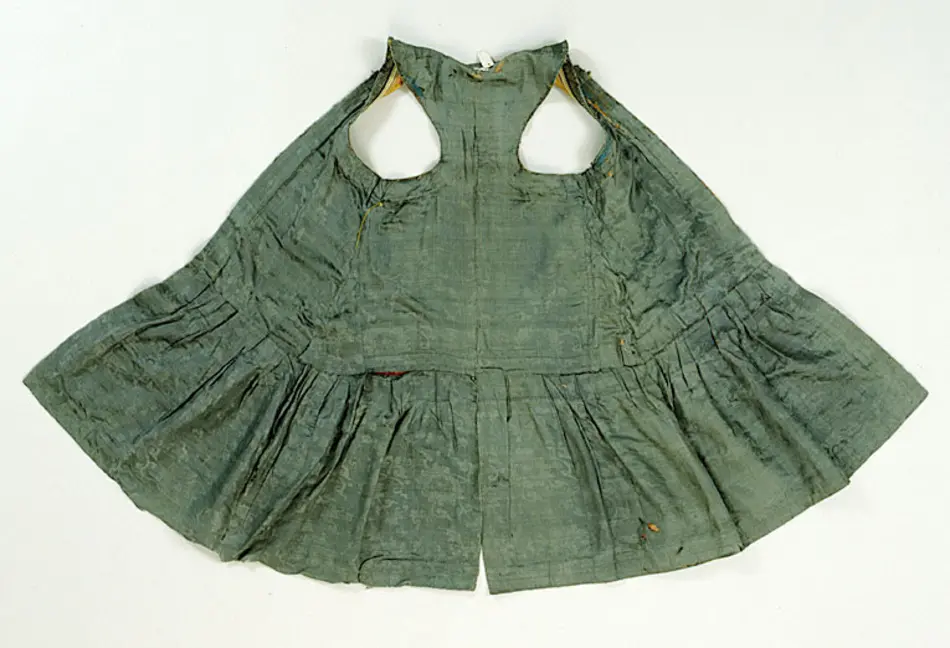
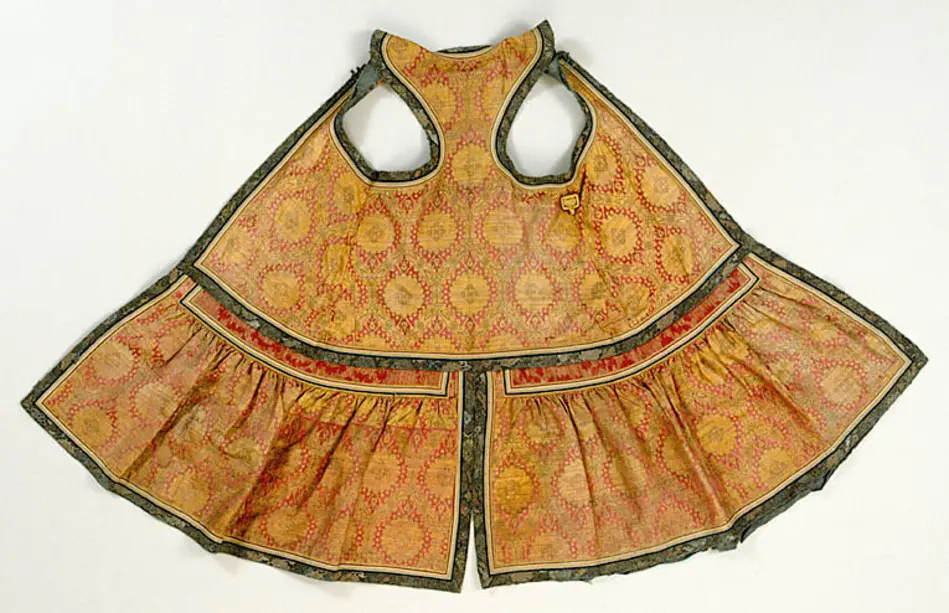
Female Dzungar dress and sleeveless coat worn by Brigitta Scherzenfeldt; donated to the University of Uppsala by her husband Johan Gustaf Renat.
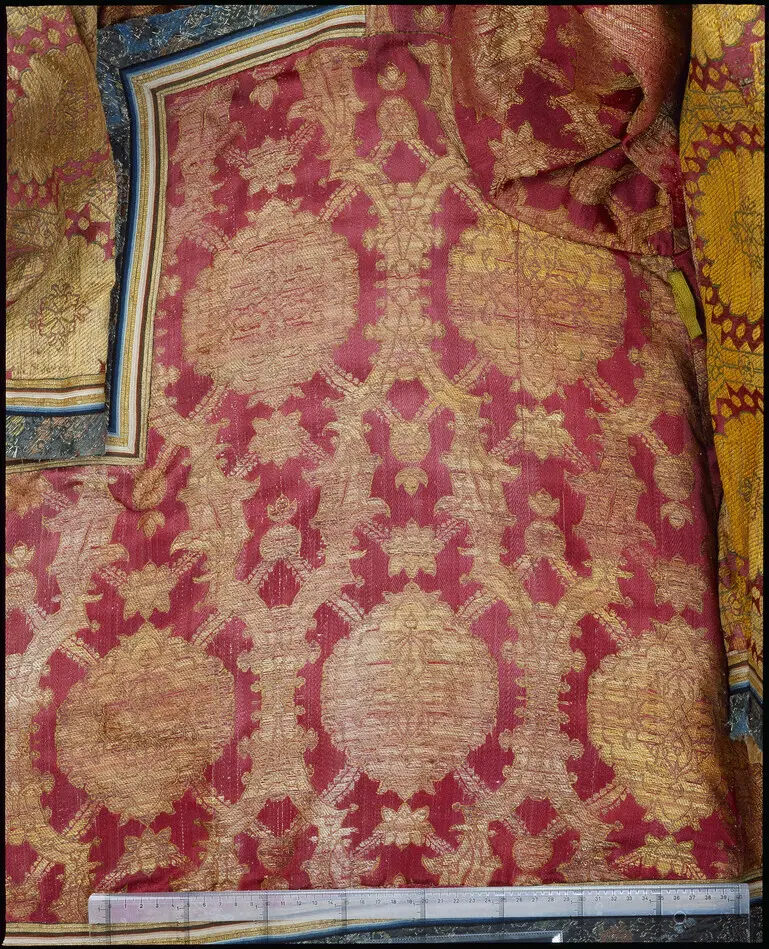
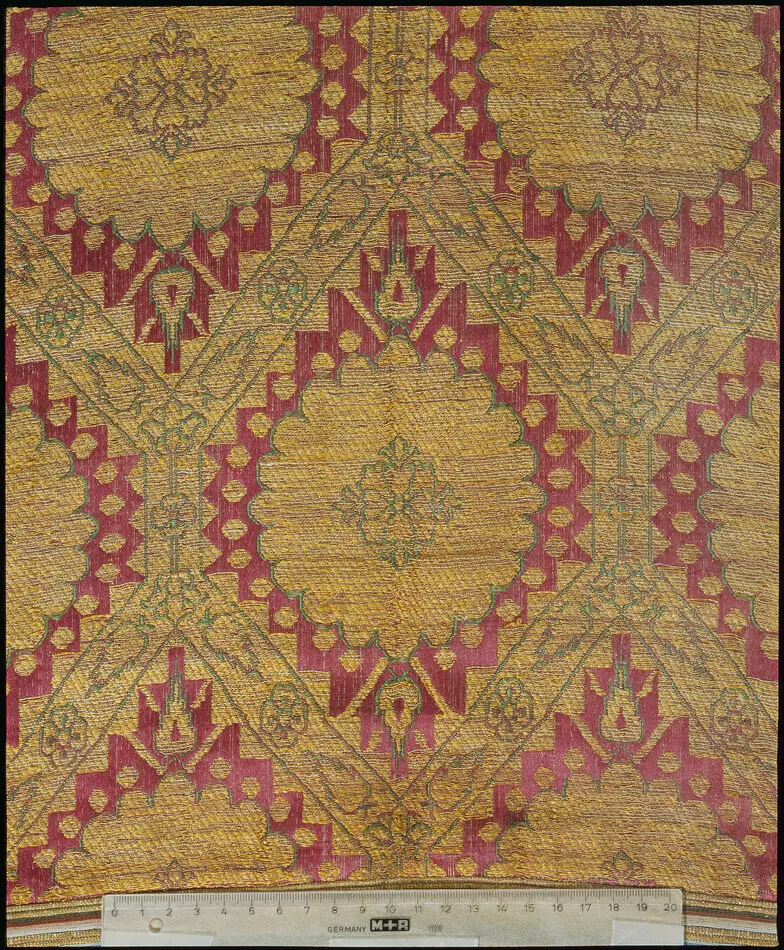
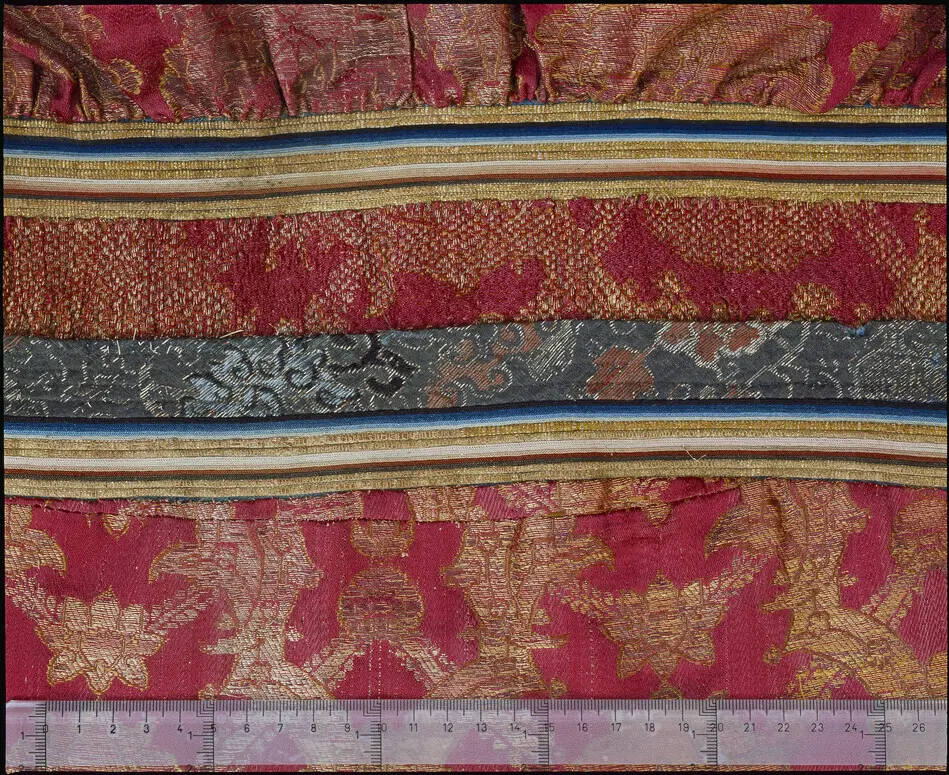
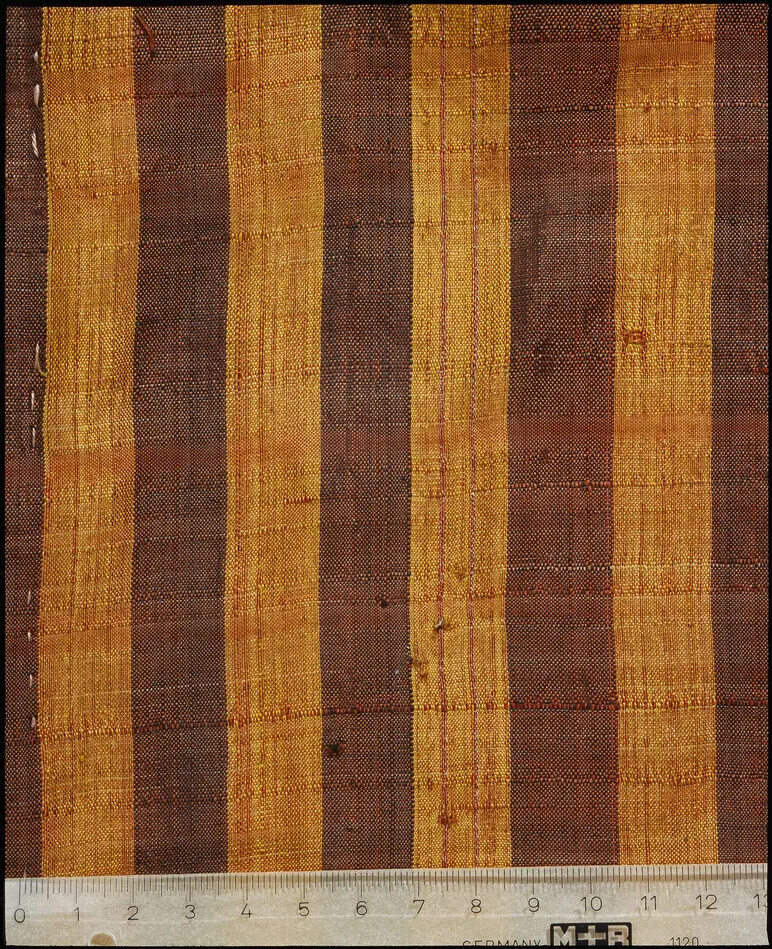
- https://samlingar.shm.se/object/07075F3C-DACA-4C20-8DC2-57BDDEC6DEEC
- https://www.battle-of-qurman.com.cn/literature/Pastukhov-2021b-E.pdf
- https://www.battle-of-qurman.com.cn/literature/Pastukhov-2021c.pdf
- https://www.battle-of-qurman.com.cn/literature/Pastukhov-2021b.pdf
- https://mongoloved.kigiran.com/jour/article/view/704/500
- http://en.chinaculture.org/library/2008-01/29/content_28829.htm
- https://www.youtube.com/watch?v=ZhLuRxEDmWA&t=240s
- https://kalmchat.com/2018/08/31/kalmyckie-pricheski/